When Clouds Appear as Mountains is Live!!

My first novel, When Clouds Appear as Mountains, is available in paperback and Kindle!

This has been a (non-continuous) decade in the making! It seems crazy that I’m actually finished with it. It is fiction, but it draws heavily from my life as a 19-year-old weirdo. It felt like I was living in the novel at the time, and after about a dozen re-writes, that novel has come to fruition.

Anyway, it has been a crazy few months since I moved. But now that this novel has been released, my solo band’s new album is out, and my guitar pedal company is becoming more stable, I should have some more time for more literary experiments (as well as time to start on the second draft of my next novel!).

Thanks for reading.

When the Present is a Distant Memory

Hakon started the day like any other: he rolled out of bed, washed his face, and went to the kitchen. Fully rested, he poured a glass of water and turned on the food synthesizer. As his nutrient-dense, savory meal was created, he took a step out to his balcony to breathe in some fresh air. It was autumn, but it hadn’t started getting cold yet. He could see the other homes and buildings, but none of these were large enough or close enough to cause much of a change in the horizon: he could see the ancient, smooth and grassy mountains in the distance. Birds were singing. A bell chimed, signalling that his food was ready.

Sitting down at his kitchen table, he ate a meal resembling chicken eggs cooked over easy with some toast and an apple. Of course, only the apple was a natural product. People hadn’t consumed real chicken eggs since the dark ages when people still ate flesh and crammed creatures into cages for food. Hakon couldn’t imagine such a time; he grew up around food synthesizers, and in his day-to-day life, fruit was the only source of food which people obtained outside of the synthesizers. It wasn’t that the synths couldn’t create fruit, it was just enjoyable to gather some fruit from the orchard now and then.

Fed, Hakon started to walk to his office. It was very nearby. He was greeted by nearly everyone he passed, and he greeted them as well. As he neared Cynthia’s Grub, he realized he had forgotten to bring any food with him. He stopped at the cafe.

“Forgot your lunch again, huh?” Cynthia greeted him.

“You know me too well,” he replied.

“Here, take this one. I had a feeling you’d be in, and synthesized one of your favorites: spicy noodles with mushrooms.”

“Thanks,” he said. “I owe you one!”

He had wanted to say more, as per usual. He had been developing quite the crush. But he didn’t want to bother her while she was working. He needed to get to work, anyway.

And soon, he was there. His office was fairly standard: a thick glass dome with an adjustable tint, a small couch, and a desk. He had a small refrigerator under his desk, but he chose to keep his lunch out in a sunny spot to keep it warm. He fired up his musical synthesizer and got to work.

“Work” perhaps wasn’t the best word for what Hakon and Cynthia were doing. It wasn’t as if any currency was being gained. Their society was primarily powered by the sun and wind, their daily necessities synthesized with the resulting electricity. Work was just a way for people to get out of their dwellings to pursue their interests. The format of “exchange” was a hold over from the dark ages. Proper etiquette dictated that one said “I owe you one!” when receiving an item from someone else. Only those interested in ancient history really understood that this was a holdover from when abundance first became common. The concept of owing someone something was actually quite foreign to most people, as it implied that needs weren’t always met by default. Most people didn’t enjoy thinking about such things.

Hakon passed the time the way he typically did. He tuned his oscillators, and then he started with some long, sustained drones with evolving textures. He always liked hearing things like that in the morning. After tweaking some filters and adding another harmonically related drone, he felt he had created something that others might enjoy listening to as well. His tapedeck was integrated into his music synthesizer, so he simply hit the record button. He enjoyed his lunch while listening to his new song unfold. Cynthia had made it just how he liked. He felt happy thinking about her. He thought to himself, “Maybe I should forget my lunch tomorrow, too. I’ll leave a bit early, and if she isn’t too busy, I’ll invite her out to dinner…”

Hakon was satisfied with the song he had made, and decided he was done with work for the day. He uploaded his tape to the Network, where anyone who was interested could make a copy of the tape to listen to. Outside of music and food making devices, the technology of the day wasn’t all that complex. They were just nice tools. He was feeling a bit more pensive than usual after work, so he found the stream that passed through town and followed it to the mountains until it started getting dark. He hadn’t been thinking of anything in particular, but was completely lost in thought. He found himself back at his little house, and unusually exhausted. He decided to forgo dinner and went to sleep. He was asleep almost as soon as he was in bed, and was dreaming almost as soon as he was asleep.

Hakon didn’t always remember his dreams. They usually just felt like little stories, and he often didn’t find much meaning in them. People in general paid a lot of attention to dreams, but also recognized that they weren’t always important. That night, Hakon had the strangest, most vivid dream he had ever had in his 34 years on Earth.

The dream began the same way most of his days did: but when he went to his balcony, three strange figures were sitting at a table, waiting for him. One of them looked vaguely human, but with long, pointy ears. The other two looked a bit more like insects, but had some humanoid features (they were apparently bipedal, for one thing). The human-looking one addressed him.

“I hope we have not alarmed you, Hakon.”

“Maybe just a little bit. Who are you?”

“Let me first say that you are currently asleep. This is a dream, and you have nothing to fear.”

“That kind of makes sense,” Hakon said. He was fairly open minded, and while it wasn’t unheard of for guests to make themselves at home without invitation, Hakon had never seen creatures like these before.

“We have a very important decision for you to make. You have noticed that we appear strange to you. That is because we are not creatures of this planet. My companions and I are all from different planets, very distant from yours. Many, many years ago, your people sought to find us. They sent complex devices into outer space. As you know, your ancestors lived very differently than you do now. In their age, the greatest danger to humanity was other humans.”

“Yes, I learned a little about this as a child. Apparently they would kill each other in competition over resources. I never really could understand why they would do that.”

“Your ancestors were plagued with destructive ideas. Do you know much of their power structure?”

“I know they burned some sort of noxious material for fuel, I think made from the corpses of long dead creatures…”

The beings laughed a bit, “No, not that sort of power. You must not be particularly interested in ancient history.”

“Not particularly. What do you mean? I think one of the things we have in common with our dark age ancestors is power.”

“You speak of power in terms of energy. The power I am speaking of is about control over resources and other people.”

“Oh, right. That was another thing that never really made sense to me. It seems mean and unnecessary.”

“Suffice to say that your ancestors came from a deeply unfair time. A small group wielded a lot of control over everyone else. They would bicker among each other and trick their populations into fighting. It was a terrible time.”

“Yes, I don’t really like thinking about it. It sounds like such a nasty way to live.”

“It was, and their nastiness is why they failed in their attempts to meet creatures such as myself. It is that their world is gone that we now reach out to you.”

“Me?”

“Yes, you. We have been monitoring this planet for a very long time. In your dark ages, there would have been individuals in charge, but in your day, no one wields ‘power’ and so there is no reason for us to pick anyone in particular to contact. You live in such a place that it is easy for us to contact you in this way. Had you fallen asleep later, we likely would not have met.”

“I see, I was in the right place at the right time, then?”

“Precisely. And now, we ask you for permission to visit your planet in physical manifestation. As wonderful as your life is now, contact with creatures such as myself can improve things. You could travel through space, meet different sorts of creatures, and experience unimagined wonders.”

“Really?”

“Yes. But it is solely up to you. Will you welcome creatures from the universe to your planet? As it is no longer a hostile place, your society is now welcome to benefit from the wisdom of many societies.”

“Um.”

“Do not answer right now. Think about what this means. We will see you once you have decided.”

And with those words, Hakon found himself in bed. It was morning. He was awake a bit earlier than usual.

*

The day started like any other: Hakon rolled out of bed, washed his face, and went to the kitchen. As his nutrient-dense, savory dish was synthesized, he stepped out onto his little balcony. This triggered his recollection of the dream. There wasn’t a cloud in the sky.

“Why did they choose me?” he thought. He remembered what the creatures had said, but it did not satisfy his curiosity. “Such a decision does not seem fair to leave to one person. Even if what they say can only be positive, what if that is just from my limited perspective? They said I must decide, but they did not say I could not seek advice.”

With that thought, he left without eating. He went straight to Cynthia’s Grub. Her cafe was not open yet, but Cynthia was awake and having her meal at a table outdoors (she lived in the same building as her cafe – Hakon only worked outside of his home because he enjoyed walking around town, especially walking past Cynthia’s Grub). “Hakon, are you alright? It’s early for you to pass by.”

“I’m actually not passing by; I came to talk to you,” he replied. Cynthia blushed. “I… had this dream.”

Cynthia listened attentively. When Hakon finished his story, Cynthia spoke. “I see, that’s a big decision.”

“Yes! I’m not particularly satisfied with the reason I was chosen.”

“It’s a compliment though, isn’t it? I mean, why not you?”

“What would you do?” Hakon asked her.

“I’d probably come ask you,” Cynthia laughed. “Yeah, it feels strange for one person to not just represent all people, but what about everything else on Earth?”

“Exactly! While I can at least consult other people, what about the birds? Would they be ok with this?”

“Right? What if a mosquito tries to bite one of these creatures and gets ill?”

“How like you to empathize with a mosquito,” Hakon said. He enjoyed how sweet she was.

“Fine, fine, what if dogs think they smell bad?” Cynthia laughed.

“Well, I think I have my answer, really,” Hakon said. “I simply cannot speak for the other creatures. And without their permission, I have no right to change this ecosystem in any way.”

“I think that is a good choice,” Cynthia said. “I suppose you will see them in another dream?”

“I guess so,” Hakon said. “…May I come tell you about it tomorrow morning?”

“Please do, Hakon. It is always a pleasure to see you.”

That evening, Hakon dreamed of the creatures again. He gave his answer.

The creature he had spoken with smiled in reply: “Humanity has passed our final test. You are correct, it would not be fair for one human to speak for all creatures of your planet. Your ancestors saw this planet as their property to destroy if they wished. You do not. However, I have not told you the entire story.”

“You see,” the creature continued, “your species is the last on this planet which we have asked this question. All of your fellow creatures were invited into our group even before your previous human dark age. They have never strayed from their purpose on this planet, that was a uniquely human problem. There is actually no purpose in us physically manifesting on your planet. My kind is not limited by such concepts as physicality. What you have done is taken down the barrier which keeps humanity out of this much larger society in the non-physical realms. Every human dreaming right now is in fact witnessing this moment. Humans will no longer be trapped on Earth in their dreams, and other beings are no longer prevented from interacting with humans. Welcome to the intergalactic fellowship!”
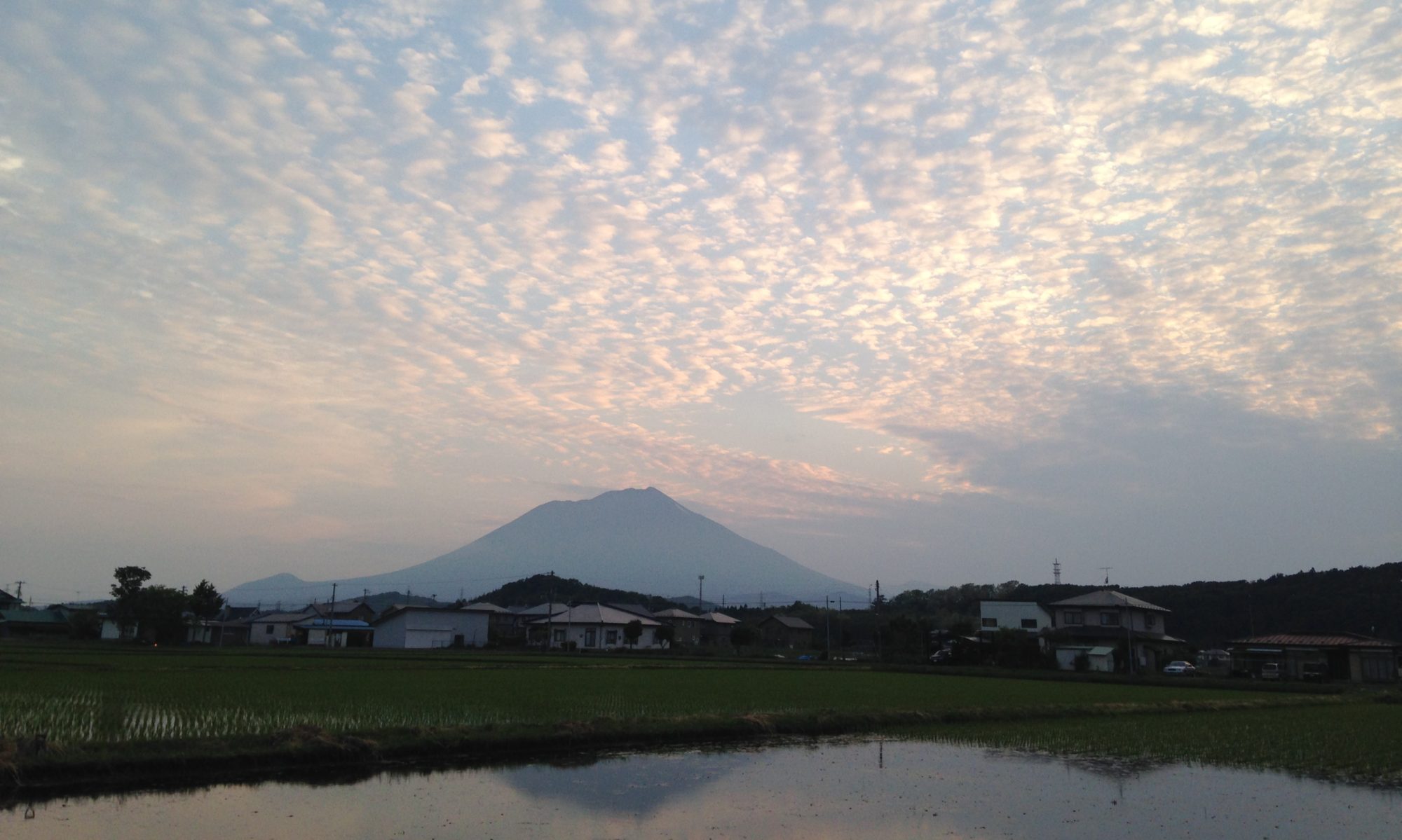
The State of Things, 1

Over the past few years, I’ve been more-or-less pushed into the sidelines of society. It has given me something of a unique perspective. It is easier to see some things from the outside.

For today, I’ll focus on jobs.

It is worth noting that capitalism requires unemployment to operate. People must feel desperate, must feel that there is a real possibility of homelessness and starvation so that they are willing to accept grueling working conditions for low pay.

It seems like everyone knows that there are currently only a handful of jobs actually available. The cause is the same cause as most problems facing society: greed and corruption being the primary “controls” over power. But the media likes to blame to different things: one group blames immigrants (by which they just mean people who are not white) and other blames the other group (failing to recognize the problem existed when they were still in power).

So when reports come out telling us all what we already intuitively know, people are fired for speaking the truth. And the other side claims there is nothing they can do because they are not in power (and they largely lost their power because they chose to support genocide).

The result is that there are more and more people without reliable income. People are encouraged to be afraid. They are encouraged to scapegoat their neighbors. When their neighbors are disappeared, nothing improves. If those people had really been “stealing” anyone’s job, wouldn’t there at least be more jobs? The fact is that those in power require a lot of us to be in poverty.

This machine runs on our blood, sweat and tears. This machine does not serve us. None of this should be news to you. Sometimes, even the regular media will report this. What they don’t report is what we should actually do. The answer is actually very simple: nothing. As in, do not feed the beast — a general strike has worked time and time again. This is only one vector of approaching one of the problems in society, but this is a simple and effective solution. The vast majority of us keep this machine running, although it does nothing but harm us. If you want change, stop feeding the beast which is out for our blood.

Everything is Broken Now

I wake up, and out the window, everything looks normal. The sun shines, birds chirp, a cheerful dog barks in the distance.

But in the human world, nothing works. All the food is poisoned with microplastics. The way society is organized is maddeningly stupid. People live in little worlds full of hate for what they do not understand. Their hate curses and rots our world. Those of us not blind with hate are powerless — everything hinges upon the most stubborn, most obnoxious, to change their ways. The least likely group of people to awaken to themselves are steering the ship, and it is being steered directly into a field of icebergs and mines.

A bird sings its song, and I wonder why we live in this artificial world when a real one is just outside. Rather than face reality, reality is fought. This is a fight that we can only lose. The only way to win is to recognize that there is no need to fight. But when cowards pose as warriors must make this decision, one wonders: perhaps my next life will be in a better world.

The bar is pretty low.

One Moment

It’s hard to say when exactly the system failed. It was probably a few years ago. But just as the powers at be continue to prop up our perished economic system and society a-la Weekend at Bernie’s, society at large goes on as if things are alive and well.

There was one particular moment when it was all unmistakably clear, though.

One sunny summer day in Australia, I went to have lunch with some classmates in celebration of completing our first semester of law school.

Carrie, one of my Chinese friends, asked, “Where have you been the happiest? Do you like it here better than in the US? What about compared to Japan?”

I didn’t really need to think about this one. “Definitely here. Things aren’t perfect, but it feels pretty good here. I know my wife’s MBA program was a bit of scam, but I think she’ll find a job here and we’ll be happy. I don’t really even think I’ll be visiting home anytime soon,” I said.

Concurrently, my wife was reacquainting herself with a Hindu goddess she had once worshiped.

I came home from lunch, and my wife and I were sprawled out on the most comfortable couch I have ever owned. It was a pale green cloud for the two of us.

My phone suggested I read a news story about how the migration policy of Australia had changed, and it was almost like a targeted attack. By the time I finished law school, I would be exactly too old to be allowed to use my new degree to get a job in Australia.

Within weeks, we found ourselves crammed into my wife’s childhood bedroom in a small town in Oklahoma, our lives in Sydney feeling completely unreal. The world we had spent our lives in no longer seemed to be there anymore.

When my wife got hurt a few weeks later and no one cared to stop and see if we were ok, I felt in the pit of my stomach that the world had ended.

Nothing was ever the same again after that moment. In that moment, it became unbearably obvious that we were seeking help from a corpse. That all of us were living inside the belly of a long-dead beast.

And once that veil was lifted, it never came back.

The Painting

Yolanda stands at her easel, immersed in the colors and forms she is creating.

The seconds turn to minutes to hours.

To days.

Yolanda no longer sees the easel.

She looks around and sees nothing but the world of colors and forms she had dreamed.

Yolanda lives in a dream.

Collide the Tide

Linda stepped out onto the deck. Her legs were steady despite the rolling waves. The sun was warm, but the drops of water in the air were cold. She was happy to be wearing a coat.

A sailor approached and was waved away. She didn’t come outside to talk. “These damn men can’t wipe their own asses without asking me about it first,” she thought.

Looking up at the sky, and then down to the horizon the direction of travel, she knew the storm would begin just before making landfall. “A little rain never hurt anymore,” she thought. But she didn’t mean it. She knew it would hurt a lot.

When the ship came crashing into the dock on the storm surge, she was glad that she had not expressed the sentiment out loud, despite how banal the experience had become. All the same, she had no plans of going out to sea ever again anyway. She didn’t care what happened to the ship. She dove into the black water as the ship was dragged back out in the receding surge. Her and her crew had had to abandon ship at a port due to storm surge too many times to count. In this instance, she waited until everyone else had abandoned the ship before diving in.

When Linda first went to sea, things like this didn’t happen. She had heard things like this would happen some day, but the media and politicians all implied she’d be dead by then. They were wrong about how quickly the world she grew up in would deteriorate, along with just about everything else.

She clamored onto to shore and could see most of her crew had survived. “Human hubris is the root the of all evil,” she thought as she waded through the garbage.

Hollow US Politics

Biden is handing the election to Trump. Hubris may have him thinking that people care more about keeping Trump out of office than they care about genocide, but this is a false dichotomy. I think people care enough about this to vote for a candidate that openly opposes genocide.

Biden has trashed his credibility by aiding and abetting genocide in Gaza, approving new fossil fuels operations while claiming to be the Climate Change President, not following through on his promises regarding student debt, his disastrous withdrawal from Afghanistan, and playing a direct role in what will likely be known as World War III.

None of this is to say Trump would have handled an individual one of these issues any better. It’s just that that is the point. The Red team and Blue team have the same owners. They differ purely on domestic, social issues. But even then, it is more of a tone of voice that is different. Taking abortion as an example, there was a time not long ago when both houses of Congress and the President were all on the Blue team and yet managed to not pass any legislation to protect abortion rights while it was common knowledge that the Red team had been trying to get the Supreme Court to overturn the landmark decision with laser-focus for decades through their judicial appointments. The Red team is clearly up to no good, the Blue is subtly up to no good. Deciding who is the lesser of two evils has devolved into choosing how much poop you’d like to eat, with the tacit assumption that “none” is not a viable answer.

I have three baseless predictions for how things could turn out (this is also assuming Trump wins the primary or doesn’t admit he lost if he loses it).this is also just assuming Trump wins the primary or doesn’t run independently if he loses

One is that the parties realize that running to two most unpopular people on Earth is not a good decision (unlikely since that would imply we live in a sane society). This is more of a pipe-dream.

Two is that Biden and Trump both straight-up die because they have both exceeded the average life expectancy already (to say nothing of their actual fitness for office at the age, an age long past retirement for every other field).

Three is that more people than normal vote for third-parties. The Red team and Blue team seem to have no problem alienating large numbers of their constituents. Pollsters might not be talking about it, but what compelling reason is there to not vote for a third-party anymore? The two big parties are essentially wings of the same party, and that is becoming more clear every year. Even the name is misleading– “third” party makes it sound like there are two other choices that aren’t just the right and far-right wings of the capitalist empire party. They may disagree on whether or not to respect someone’s gender identity or to recognize the basic history of the US, but they are firmly in agreement that the US needs endless war, homelessness, and that short-term profit is more important than ensuring a long-term society.

Ugh. I think I need to get back to writing fiction.

Australia’s Scapegoating of International Students

The Australian government, specifically the Labor Party, is grasping at straws. Rather than address the complex issues facing their society with solutions that touch on their actual causes, they have decided to rest the blame on international students.

It is telling that the vast majority of international students are from Asian countries. The rhetoric about international students seems like a thin veneer over a racist core.

While the referendum for an Aboriginal advising body for Parliament to be added to the Constitution should have been an easy slam-dunk as a basically symbolic gesture to one of the most grievously wronged groups of people on Earth, the Australian people showed the colors and chose oppression and racism. Since the referendum was tied up with Labor’s pursuits, its failure, they fear, symbolizes the end of their reign.

Their response to this, rather than reach out to their base and remain to true to what are supposed to be left-leaning ideals, they are appealing to the racism that voted against the referendum.

Cities like Sydney do not have enough places to house the population. Rather than reform their housing policies to incentivize affordable, decent housing built vertically to support an urban population, the government has decided that immigrants are taking too many places to live from “real” Australians.

Rather than addressing the complex causes of the “cost of living crisis,” they blame it on people from other countries abusing student visas.

Australia has a slavery and human trafficking problem. People essentially fleeing repressive governments have their desperation used against them, and are tricked into coming to Australia by companies promising a future they cannot deliver. One tactic employed is to get people into the country as students, and then once here, leverage that to get them into doing unskilled labor for little to no reimbursement. The latest migration policy changes can be seen, in some regard, as a limp effort to do something about this. By raising the English language requirements and requiring some evidence that student visa applicants are truly students, they could block these desperate people from being taken advantage of in this way. While this does nothing to address the fact that these are humans seeking safety that are being turned away, it makes it harder to abuse a student visa.

But they don’t stop there. Vocational schools are being outright closed down. This supposedly is because the dreaded international students enter into these vocations. But by closing the schools, this curtails pathways into the trades for everyone. It isn’t like Australia no longer needs trade-workers. Especially if there was any intention to address the housing shortages in any meaningful way.

There is another visa in their crosshairs, the graduate visa. The purpose of a graduate visa is to give recent graduates a shot at finding employment in what is likely a new field. After gaining some experience, other kinds of work visas are more accessible. It was already strange that this was limited to people under 50 before, but now this age limit has dropped to 35. While people abusing the student visa system to essentially get low-skill workers, those same people are not graduating from schools and seeking graduate visas to get the required work experience to qualify for a sponsored working visa; they are withdrawing from school and disappearing into what effectively amounts to slavery. Dropping the age limit to such a young age effectively makes it so that an adult seeking to change their career path should skip Australia, and does nothing to address the problems the government is “trying” to address. They cite wanting to keep people in the workforce for a long time as a goal, as if millennials will ever actually be able to retire.

They have also dropped the maximum age to apply for permanent residency to 45. These age restrictions read as if a bunch of 8-year-olds were asked at what age someone becomes old rather than engaging with reality.

If the Labor Party’s goal is to decrease immigration, then this policy is already working for them. I came to Australia to pursue a degree in law. While my initial interest in law was more focused on climate change, seeing the way Aboriginal Peoples have been treated here really motivated me to focus on human rights and providing legal aid for people who cannot afford a lawyer. This is a chronically understaffed field, as the work is difficult, and the pay is much lower than other fields of law. It is a role that is desperately needed in Australia. This change to the migration policy has cost them at least one of these lawyers, as I will be unable to gain the required work experience to get a work visa after my degree. There is no point in even finishing my degree here.

Australia, like most places on Earth, is also in need of nurses and other medical professionals. My wife is studying to become a nurse to help satisfy an actual need facing society, and Australia has consequentially lost a future nurse as well.

Other people pursuing advanced degrees are in the same situation. There are several vacanies of skilled workers which Australia cannot fill, and these policies, while freeing up a few apartments, will not fill those gaps in employment.

By scapegoating people from other countries (the majority of which are from Asia, those from the West are collateral damage), the Labor Party, aside from moving further towards right-wing politics and alienating their own voters, is poised to worsen all of their problems. International students, by the college enrollment, make up and significant portion of Australia’s economy. Schools will be losing money, and the result will damage Australian students. Australians will be simultaneously forced to both enter more highly skilled roles and more low-skilled roles. Australia has appealed to me before as it seemed to be resisting the urge to let politics become sports, where one team prevailing becomes more important than the actual work of government. And I was wrong.

In other words, this decision was short-sighted, cruel, and has left a putrid taste in my mouth. I worked hard to get here, I took on new student loans, and it has all been swiftly flushed down the toilet in an appeal to racism as part of a desperate plea to remain in power.

Good riddance.

Failure?

The two most pressing issues regarding the continuation of organized human society have been known for decades. Very little has been done to mitigate them, and the question now seems to be which will destroy us first, the climate or nuclear weapons?

Fun fact! They can all represent the four horsemen of the apocalypse (double-featuring Death).

Climate catastrophe – Famine, Death

The ice shelves of West Antarctica are almost certainly going to melt – this is now unavoidable, even in the best case scenario, which we are not even on track to meet.

To avoid dramatic sea level rise, not only would carbon emissions need to stop immediately, carbon would need to be captured from the environment. No nation is coming close to completely cutting out carbon emissions (as even green energy, at the very lease in the creation of their infrastructure, requires mining and fossil fuels – at least with current technology). Carbon capture technology is still basically just an idea and not something which is actually ready to be deployed.

Even taking this recent study (linked above) as not being a perfect study, the West Antarctic ice shelf is not the only tipping point we are approaching. The Gulf Stream could collapse as early as 2025.

For all the chaos climate change has already caused and can cause (such as epidemics and famines), there’s a much worse option.

War, Conquest, Death

War does all sorts of awful things – one of which is contributing to climate change. But aside from that, it’s much more likely to just kill everyone, and rather quickly at that.

(Tangentially, war is extremely profitable – a short book written nearly 100 years ago reads like it was written this morning, particularly when rumors circulate that a nation has hinted that a war might stretch on for years)

The only thing I wish to delve into in relation to the latest atrocities in Gaza is that it brings the world closer to nuclear war, during a year where it was already closer than it has ever been.

The Doomsday Clock was set to 90 seconds to midnight at the beginning of this year – largely due to the war in Ukraine. Adding another conflict with a nuclear-armed power cannot help. The alliances and friendships between the nations involved does not help, either.

Unfortunately, it is not an exaggeration to say that an all-out nuclear war between the US and Russia would kill almost every human on Earth. The initial blasts would be dreadful, but their longer term impacts would lead to global food shortages – within two years, more than half of the people on Earth will have starved to death.

Should we just call it quits?

None of this is guaranteed to happen – some of these problems, particularly in relation to climate change, may be entering the realm of being too late to completely avoid, but these outcomes ultimately rely on choices which we all must make.

The primary way to avoid utter climate disaster is to move away from an extraction-based, consumption-based economy and to a form of organization that is not reliant on profit-seeking but on well-being.

A large issue with moving to this sort of economy is that there either must be a revolution, or those holding the reigns must act against their own greed. The problem with a revolution being that we must avoid the sort of thinking which created these problems – that is, at least in large part, patriarchal. A more gentle approach is required – and yet how does one gently forcibly replace the underlying ideology of society? Is there a gentle way to prevent recently displaced capitalist warlords from staging a counter revolution? This ideology needs some fine tuning. Time will tell if there is time for that.

If we are on a ship (which happens to have some organizational and equitable problems) heading straight for an iceberg, it is everyone’s best interest to divert from the iceberg and worry about the new course after immediate danger has passed.

This same solution (and problems with it) would help to avoid nuclear war. The only way to truly avoid a nuclear war is to dismantle nuclear weapons and for all parties to agree to never use them. This is easier to imagine taking place in a gentler society that is not based on competition and power.

What does it all mean?

Doodley-squat.

Human beings ceaseless search for meaning in a meaningless universe – it is Absurd.

Recognize that Absurdity and seek unity beyond it – that is the start of this gentle way, to see that none of us are truly that different from one another, we can all live better lives building each other up rather than tearing each other down.

I would rather keep trying and fail than to give up. Giving up will not solve anything. Being gentle is not the same as being weak.

The Unspoken Requirement for Net Zero Carbon Emissions by 2050

Climate change is on track to be the downfall of our current form of society, in one way or another.

While media outlets and political bodies frame it as a simple issue of moving to green technologies, the reality is not so simple.

Moving to these technologies at the scale required to maintain the current way of doing things requires resources and minerals which are not readily available. Acquiring these resources, using the known methods with the stipulations imposed by our current economic system (in other words, doing so in a profitable manner) is environmentally destructive (although efforts are being made to change this, resource extraction is the definition of the exploitation of the Earth) and takes an amount of time that we simply do not have (unless there is a way to synthesize the minerals required to create solar panels and wind turbines, we need vast mining operations).

That isn’t to say it is impossible, but doing so would require methods which are not as profitable as current systems, and in a capitalist system, that essentially means it is impossible. If profit is dethroned from its place at the top of all priorities, the cost (including lost potential profits) involved in making these changes no longer will restrain action, and if a healthy economy is decoupled from one expanding infinitely, there is no longer an infinite demand for more resources.

As they say, infinite growth is impossible on a finite planet. Abundant resources seem infinite until they run out. Even the UN admits that reaching this goal requires a complete transformation of society, including economic systems.

Capitalism requires endless growth – if the economy stops growing, there is crisis. Capitalism is fundamentally not sustainable, and as long as humanity staunchly opposes the idea of moving beyond capitalism, we are doomed.

For example, an often discussed “solution” to the climate crisis is a transition to electric vehicles. The issue being that cars are fundamentally wasteful: at best, they require large amounts of a number of minerals which must be mined from the Earth, only to spend most of their time parked. The land they require for parking contributes disrupts ecosystems, the water cycle, and makes areas hotter. Additionally, electric vehicles aren’t exactly “green” if the electrical grids charging them are powered by fossil fuels.

While there are cleaner power sources, they also require minerals which are not always easy to obtain and not in infinite supply. They are also not built to last forever.

While this isn’t a call to stop trying, or not pursue the good because it is imperfect, it is a call to look at the material reality of the situation we are all living in. Several of the roadblocks to avoiding climate apocalypse are rooted in the economic system we currently live in.

There is no reason to stay dedicated to capitalism. It is not the natural way of things, and things have not always been this way. To allow the technology we desperately need to come to fruition before it is too late, we cannot continue to do things and live in the same ways as we have for the last one hundred or even two hundred years.

If we cannot create a truly sustainable way to move forward, then there is no solution. Moving backwards is not enough – people do not have the skills they used to have, most people cannot be dropped into a pre-industrial world and get by. Some amount of de-growth will be required (life is still worth living even without some of the modern luxuries), but without completely changing the path, we will end up back in this same place.

Ultimately, we need to move past capitalism. It is an economic system which has ceased to be useful and the continued existence of organized human society requires that we move on.

Industrial capitalism cannot save itself from industrial capitalism. We can either choose to put our continued survival above an economic system, or we can perish in the endless wars of resources, natural disasters, and unbearable landscapes to come.